










Key Takeaways:
- Android app development uses multiple programming languages, and there is no single best language for every Android project.
- Kotlin is the most commonly used language for native Android app development and is officially supported by Google for modern Android applications.
- Java continues to play an important role in maintaining and extending existing Android apps, especially those built on legacy systems.
- Cross-platform Android development is typically handled using frameworks such as Flutter with Dart or React Native with JavaScript, depending on project goals.
- Python is not used for native Android apps but is often applied for prototyping, backend services, and data-driven systems that support Android applications.
- Choosing the right Android development language depends on factors such as app complexity, performance needs, maintenance plans, and long-term scalability.
Android remains one of the most widely used platforms for mobile application development, driven by its global device reach and continued adoption across consumer and enterprise use cases. As more businesses rely on mobile apps for customer engagement, service delivery, and internal operations, Android app development continues to be a priority area in 2026.
Android application development does not rely on a single programming language. Instead, development teams work with multiple Android development languages depending on project requirements, performance expectations, maintenance needs, and long-term scalability plans. Choosing the right programming language for Android development plays a direct role in how efficiently an app is built, updated, and supported over time.
In this blog, we review the most commonly used programming languages for Android app development in 2026 and explain how each language is typically applied in real-world projects. This overview is intended to help readers understand which Android app development language fits different use cases and development approaches. For businesses planning Android applications at scale, this context is often evaluated alongside delivery experience from teams such as Vrinsoft, a leading Android app development company serving clients in India and the USA.
Which Language to Choose for Android App Development?
Choosing a programming language for Android app development depends on how the app will be built, maintained, and scaled over time. There is no single best language for Android development that fits every use case. The right Android development language is usually selected based on performance needs, long-term maintenance plans, and whether the app is built natively or with a shared codebase.
Kotlin is widely used for native Android app development and is often the default choice for new Android projects. It works directly with the Android SDK and is officially supported by Google, which makes it suitable for applications that require platform-level features and long-term stability. Kotlin is commonly chosen when native performance, scalability, and easier maintenance are priorities.
Dart, used with the Flutter framework, is typically selected for cross-platform Android app development. Flutter allows teams to build Android and iOS apps using a single codebase, which can reduce development effort and speed up release cycles. This approach is often evaluated for products that need consistent interfaces across platforms rather than deep platform customization.
In practice, the best language for Android app development is decided after reviewing project requirements such as complexity, expected growth, and update frequency. Development teams, including companies like Vrinsoft, usually assess these factors before recommending an Android app development language that fits the project scope.
Plan Your Android App With the Right Technical Foundation
Get expert guidance on choosing the right Android development approach based on your app requirements, scalability needs, and long-term roadmap.
7 Best Languages for Android App Development in 2026
1. Kotlin
Kotlin is an officially supported programming language for Android development and is widely used for building native Android applications. It works directly with the Android SDK and is commonly selected for new Android app development projects. Many teams consider it the best language for Android app development in 2026 because it supports stable performance, easier maintenance, and long-term platform compatibility.
Designed to reduce common development issues found in older Android applications, the language helps developers write clearer code while lowering the risk of runtime errors. Full compatibility with Java also makes it suitable for modernizing existing Android apps without rewriting entire codebases.
Key Features of Kotlin
- A concise syntax reduces the amount of code required to build Android applications, which can speed up development and simplify future updates.
- Full interoperability with Java allows Android developers to reuse existing libraries and gradually migrate older applications.
- Built-in null safety helps prevent crashes caused by null reference errors in Android apps.
Advantages of Kotlin for Android App Development
- Official support from Google makes it a reliable choice for long-term Android projects.
- Readable and structured code helps teams maintain and update Android apps as requirements change.
- Native support for Android platform features makes it suitable for scalable application development.
Why Businesses Choose Kotlin Over Others?
- Native Android apps built with Kotlin support consistent performance and long-term support needs.
- Compatibility with Java allows companies to extend or upgrade existing Android applications incrementally.
- Widespread adoption across modern Android projects makes it a dependable option for production-ready apps.
2. Java
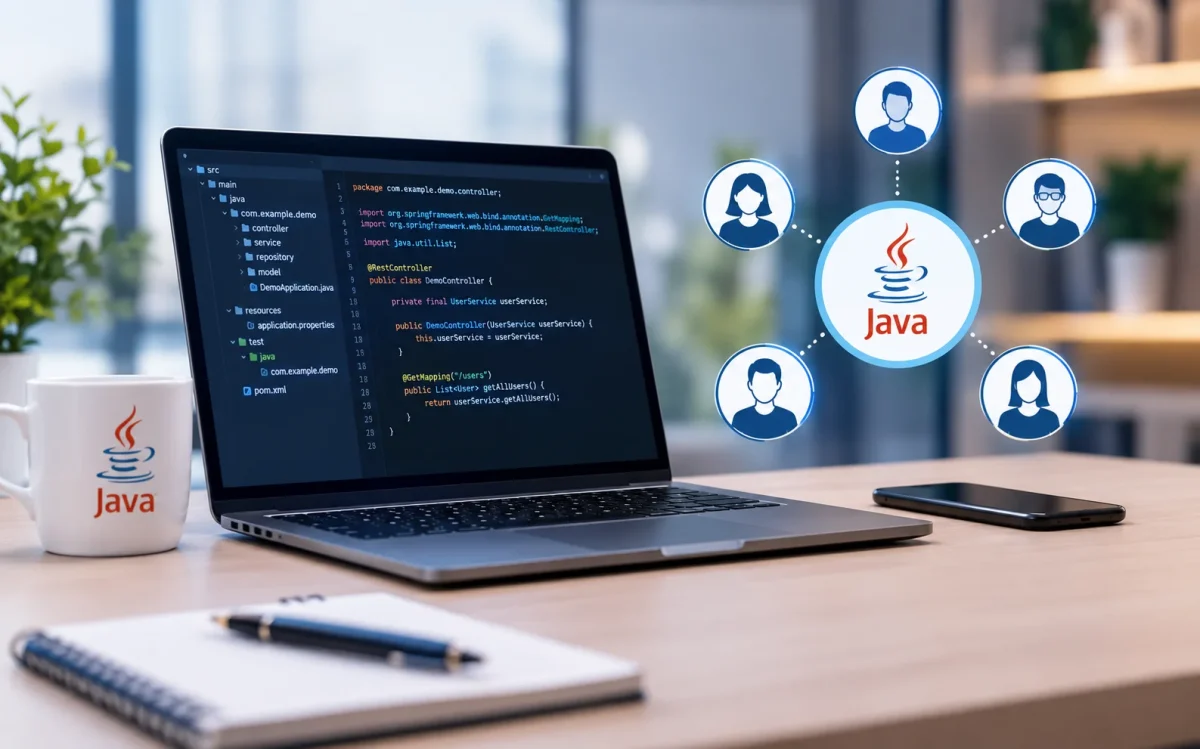
Java has been used in Android development since the platform’s early versions and remains widely present in production Android apps today. Java has been a cornerstone of software development for over 25 years, powering everything from enterprise systems to mobile apps. While newer languages like Kotlin are often preferred for new Android projects, Java continues to be widely used for maintaining, extending, and supporting scalable Android applications. Here’s why Java is still a smart choice for your Android app development needs:
Key Features of Java
- Java’s “Write Once, Run Anywhere” principle supports code reuse across environments, although Android apps still rely on Android-specific APIs and tooling.
- With a massive ecosystem of libraries, frameworks, and tools, Java simplifies the development process and ensures access to proven solutions for complex app requirements.
- Java’s mature runtime and JVM optimizations support consistent performance in Android apps with complex business logic.
Advantages of Java for Android App Development
- Java has been the industry standard for Android development for years, meaning there’s a wealth of expertise, resources, and legacy systems built on the language.
- Its platform independence supports reuse of shared logic and backend components across environments.
- Java’s stability and scalability make it a reliable choice for long-term Android app maintenance and gradual feature expansion.
Why Businesses Choose Java for Android Development
- Many existing Android apps are built in Java, making it the go-to choice for businesses maintaining or upgrading legacy systems.
- Java’s large and active developer community ensures access to a wealth of tutorials, tools, and solutions, reducing dependency on specialized talent.
- Its proven track record in Android development makes Java a low-risk, high-reward option for businesses prioritizing reliability and performance.
3. Python
Python is a high-level programming language known for its readable syntax and broad use across backend systems, automation, and data-focused applications. In the context of Android app development, Python is not used for native Android apps, but it can be applied in limited scenarios through frameworks such as Kivy and BeeWare. These tools allow Python-based applications to run on Android, mainly for prototypes, internal tools, or experimental products.
Rather than serving as a primary Android development language, Python is most often used around Android apps. Many teams rely on it for backend services, APIs, analytics pipelines, and AI-related components that support Android applications.
Key Features of Python
- A simple and readable syntax supports rapid prototyping and early validation of app ideas.
- Frameworks such as Kivy and BeeWare allow Python code to be packaged for Android, although adoption is limited compared to native approaches.
- A large ecosystem of libraries supports data processing, automation, and backend development that integrates with Android apps.
Advantages of Python for Android App Development
- Fast prototyping makes Python useful during early planning stages before committing to full Android development.
- Strong community support provides access to tools and libraries for backend systems and supporting services.
- Well suited for building server-side logic and data-driven components that connect to Android applications.
Why Businesses Choose Python Over Others?
- Startups and small teams often use Python to validate concepts and workflows before investing in native Android development.
- Backend-heavy products benefit from Python when Android apps rely on APIs, analytics, or data processing services.
- Early-stage development effort can be reduced when Python is used for proofs of concept or supporting infrastructure rather than full Android app delivery.
4. JavaScript
One notable benefit of cross-platform development for businesses is that it allows the use of various programming languages for Android app development. Although JavaScript is not a primary language for native Android apps, it can be applied with the help of cross-platform frameworks. JavaScript is used to build hybrid and cross-platform mobile applications through frameworks like React Native, Ionic, and Flutter, making it one of the best programming languages for android app development in business settings.
Key Features of JavaScript
- JavaScript is a versatile language widely employed in web development and is adaptable for Android app creation through popular frameworks such as React Native.
- A large and active community supports JavaScript, offering an extensive collection of libraries, tools, and resources that streamline mobile app creation.
- When combined with frameworks like React Native, JavaScript enables cross-platform development, allowing a single codebase to be deployed on both Android and iOS platforms and yielding significant time and cost savings.
- The language’s flexibility supports the creation of responsive and feature-rich user interfaces that meet modern business requirements.
Advantages of JavaScript for Android App Development
- The high-level nature of JavaScript and its extensive library collection facilitate quicker application development, making it a preferred option for projects with tight deadlines.
- JavaScript-based development proves cost-effective when building apps for multiple platforms, as it minimizes the need for separate development teams and reduces overall expenses.
- Leveraging web technologies within JavaScript helps create interactive mobile interfaces, contributing to an enhanced user experience.
- Reusing a single codebase across platforms accelerates deployment, which is particularly beneficial for businesses aiming to reduce time to market.
Why Businesses Choose JavaScript Over Others?
- The capacity for cross-platform compatibility means that a single codebase can serve multiple platforms, allowing businesses to reach a wider audience while conserving resources.
- An extensive ecosystem of libraries, frameworks, and tools offers practical solutions to common challenges encountered during mobile application development.
- JavaScript supports the development of feature-rich mobile apps that align with specific business needs, ensuring that project requirements are met efficiently.
- Integrating web and mobile technologies through JavaScript streamlines project workflows, resulting in improved performance and cost savings for business operations.
5. Dart
Dart, a general-purpose programming language developed by Google, is a solid option for Android app development in business projects. It offers distinct features that address the evolving demands of mobile app projects, especially for cross-platform development and creating high-performance, native-style user interfaces.
Key Features of Dart
- Dart supports rapid development by combining Just-In-Time (JIT) compilation for fast iterations with Ahead-Of-Time (AOT) compilation for optimized production performance.
- The Hot Reload feature in Flutter lets teams observe the effect of code adjustments immediately, streamlining the debugging and development cycle.
- As a statically typed language that permits optional typing, Dart delivers the reliability required for large-scale projects while maintaining flexibility.
- Its integration with Flutter promotes a consistent development process, contributing to smoother project workflows and easier maintenance.
Advantages of Dart for Android App Development
- The connection with Flutter allows a single codebase to be used for both Android and iOS apps, saving valuable time and lowering development costs.
- Flutter’s rendering engine, powered by Dart, produces high-performance and visually appealing user interfaces that support business goals.
- A growing community provides extensive libraries and resources, helping teams address common challenges and streamline project timelines.
- Modern tooling and debugging support in Dart contribute to more efficient development cycles, which can help meet project deadlines more reliably.
Why Businesses Choose Dart Over Others?
- Dart’s combination of Hot Reload, cross-platform capabilities, and straightforward UI development in Flutter increases productivity and reduces time-to-market.
- The ability to create customizable and polished user interfaces using Dart and Flutter meets business standards for quality and user experience.
- By reducing the need for separate codebases across platforms, Dart helps lower development expenses and simplifies project management.
- Its unified development framework supports consistency throughout the app creation process, aiding in smoother transitions from design to production.
6. C++
In Android app development, C++ stands as a seasoned language with deep roots and proven performance. It is primarily used in the Native Development Kit (NDK) to add native code components. C++ is typically applied to performance-critical tasks and accessing low-level system resources, making it suitable for computationally intensive projects such as games, graphics-intensive applications, and real-time systems. Although it can deliver high performance, the language demands a thorough understanding of programming concepts and careful attention to detail.
Key Features of C++
- Recognized for its long-standing reliability and performance in mobile projects.
- Commonly used in the NDK to integrate native code, optimizing app performance.
- Provides direct access to low-level system resources, supporting demanding computational tasks.
- Frequently chosen for projects with legacy codebases or applications that require intensive processing.
Advantages of C++ for Android App Development
- Delivers robust performance essential for graphics-intensive applications and games.
- Enhances app efficiency through native code integration via the NDK.
- Supports the development of stable and scalable Android apps for high-performance needs.
- Offers a strong foundation for computationally heavy and real-time applications.
Why Businesses Choose C++ for Android App Development?
- Businesses appreciate its ability to handle performance-critical tasks and complex computations.
- It contributes to improved app performance, meeting the demands of resource-intensive projects.
- Its support for legacy codebases benefits companies with existing C++ projects.
- Choosing C++ can provide a competitive advantage for firms needing high-performing Android applications.
7. C#
C# is an object-oriented programming language that is part of the .NET ecosystem. Although not the primary language for native Android app development, it can be used to build Android apps through cross-platform frameworks such as Xamarin and MAUI. These frameworks allow teams to compile C# code into native Android applications with access to the Android SDK and native APIs. C# is well-regarded for its strong performance in resource-demanding applications and compatibility with legacy codebases.
Key Features of C#
- Part of the .NET ecosystem, offering a comprehensive set of libraries and development tools.
- Utilized for native Android app creation through cross-platform frameworks like Xamarin and MAUI.
- Provides access to the Android SDK and native APIs, enabling robust mobile app development.
- Supports integration with legacy codebases, which is advantageous for ongoing projects.
Advantages of C# for Android App Development
- Offers solid performance for resource-intensive applications while maintaining reliable code quality.
- Simplifies cross-platform development, reducing the need for multiple development teams.
- Benefits from a rich ecosystem of libraries and community resources that accelerate development.
- Facilitates a smoother development process with tools that align with established business workflows.
Why Businesses Choose C# for Android App Development?
- Its cross-platform capabilities allow a single codebase to be deployed across multiple platforms, optimizing resource use.
- Integration with frameworks like Xamarin and MAUI supports cost-effective and timely app delivery.
- C#’s compatibility with legacy systems benefits companies looking to update or integrate with existing applications.
- Businesses value C# for its blend of performance and flexibility in creating modern Android applications.
Final Thoughts on Choosing the Right Programming Language for Android App Development
With the current mobile first approach, businesses are increasingly leveraging mobile apps to stay competitive and connect with their audience. With Android holding over 70% of the global market share, building an Android app is a strategic move for any brand. Understanding the best programming languages for Android app development can help your business make informed decisions, ensuring cost efficiency, scalability, and long-term success.
In this blog, we’ve highlighted the top programming languages used for Android app development. While Java and Kotlin remain the top choices, cross-platform development options also offer significant advantages for businesses looking to maximize their reach.
Conclusion: The Best Language for Android App Development in 2026
Among the various programming languages available, Kotlin stands out as the leading choice for Android app development. Its concise and expressive code reduces development time and improves readability, while its null-safety features ensure reliable, crash-free applications.
Kotlin’s seamless integration with Java libraries and frameworks allows businesses to leverage existing resources and expertise, ensuring a smooth transition and maximizing ROI. This interoperability, combined with Kotlin’s modern features, has made it the preferred choice for 60% of developers worldwide.
For businesses, this means faster time-to-market, lower maintenance costs, and a future-proof solution that aligns with Google’s official recommendations for Android development.
Why Choose Vrinsoft for Android App Development?
With over 15+ years of experience, Vrinsoft is a trusted name in the industry, helping businesses turn their app ideas into reality. Our team of skilled android app developers has successfully built and launched hundreds of Android applications, delivering scalable, user-friendly, and high-performance solutions.
Consult with us today, and let us help you build the Android app your business needs to stay ahead in the market.
FAQs
Which programming language is best for Android apps?
Kotlin is the new official programming language for Android app development, but some Android app development companies still use Java as its reliable and robust security. Here is the list of some of the most popular programming languages in 2026 based on the latest statistics.
| Programming Language | Percentage of Global Usage |
|---|---|
| Kotlin | 60% |
| Java | 34% |
| C++ | 3% |
| C# | 1% |
| Python | 1% |
| JavaScript | 0.5% |
| Dart | 0.5% |
How do I choose a programming language for an app?
First, learn about your requirements, what you want to add to your app, what functions and features you need, and your target audience. Based on this, you can choose any programming language for Android app development. Development companies mostly consult with the client, asking for their requirements and other details. Based on this information, they offer their suggestions with benefits.
Which is better for Android app development, Java or Kotlin?
Most developers choose Kotlin over Java due to various new features and Kotlin Multiplatform Mobile (KMM). However, Java is still in use and easy to learn while also offering the best support with its large developer community. Here is a table for Java vs Kotlin, which can help you choose a programming language.
| Feature | Java | Kotlin |
|---|---|---|
| First released | 1995 | 2011 |
| Official Android language | Yes (until 2019) | Yes (until 2019) |
| Learning curve | Steeper | Easier |
| Verbosity | More verbose | More concise |
| Safety | More prone to errors | Safer due to null safety |
| Performance | Generally slower | Generally faster |
| Community size | Larger | Smaller but growing |
| Google support | Legacy support | Actively supported |




 sales@vrinsofts.com