









If you’re here, chances are you’ve already spoken to at least one or two companies you found on Google and walked away more confused than before.
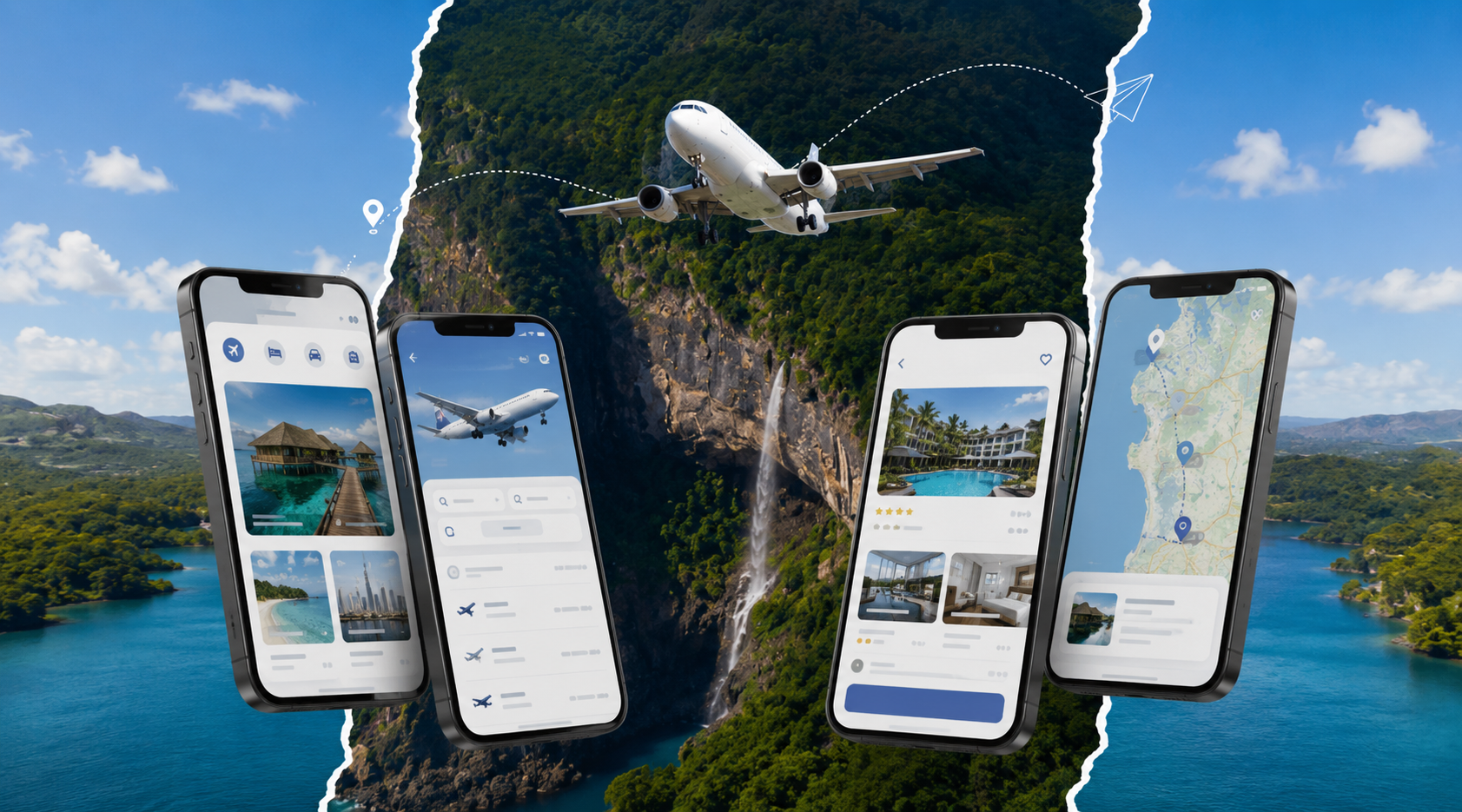
Most businesses begin travel app development with what feels like a clear idea, such as a booking platform, a tour management app, or an AI-powered travel assistant. On the surface, it sounds straightforward.
But once you start speaking to a travel app development company in USA, that clarity often starts to shift.
Many companies entering travel mobile application development initially focus only on features without fully understanding long-term scalability requirements.
One team frames it as a lightweight MVP that can go live quickly. Another breaks it into a scalable enterprise system with deep integrations. Someone else suggests using existing APIs instead of building everything from scratch.
Suddenly, the same idea starts to look completely different.
This is where most confusion in travel app development begins. In our experience, the challenge is rarely just about selecting the right development partner. It usually comes from realizing that every company interprets the same product idea differently based on how they approach architecture, scalability, integrations, and long-term platform growth.
In this article, we explore the top 10 best travel app development companies in USA in 2026 based on how they interpret and build real-world travel technology.
The 2026 Travel Tech Market: Why Demand Is Changing
The travel technology space in 2026 is growing steadily, but the bigger shift is happening in how travel products are being built. Businesses are moving from simple booking apps to full digital ecosystems that combine personalization, automation, and real-time data.
Here are a few key market indicators shaping this shift:
- Mobile devices now drive nearly 60% of long-distance travel bookings, making mobile-first travel platforms a standard expectation.
- Businesses using AI-powered personalization report conversion rate increases ranging from 28% to over 40%.
- 96% of travel and airline brands plan to increase or maintain AI investments across customer experience and operations.
- Companies like Airbnb, MakeMyTrip, and ixigo are expanding AI-powered itinerary planning, customer support, and real-time travel assistance features.
What these numbers show is simple.
Travel app development is no longer about building functional booking systems. It is about building intelligent, connected platforms that can provide response to user behavior in real time.
And that is exactly why choosing the right travel app development company in USA has become a strategic decision, and not just a technical one.
How We Selected the Best Travel App Development Companies
Not every company that claims to build travel apps actually understands how modern travel platforms work.
For this list, we focused less on popularity or marketing visibility and more on how companies approach real-world travel technology, from architecture and integrations to scalability and execution.
The goal was to identify partners who can actually build scalable travel products, not just mobile applications with basic booking features.
Our evaluation was based on the following criteria:
- Real travel domain experience — proven work with booking platforms, tourism apps, or mobility solutions
- System architecture capability — ability to design scalable, API-driven travel ecosystems
- Integration depth — experience with travel APIs, GDS systems, and third-party services
- Mobile execution quality — strong understanding of UX, performance, and cross-platform development
- Product thinking — the ability to go beyond development and contribute to product structure
- Scalability readiness — experience building systems that handle real traffic and transactions
- Verified delivery proof — live applications, case studies, or production-grade deployments
Only companies that demonstrated real execution capability in at least a few of these areas were considered for this list.
Our objective was simple. We wanted to identify companies that can build scalable travel systems, not just feature-heavy mobile applications or presentation-driven portfolios.
Also Read: Travel App Development Services: How Are They Transforming the Tourism Industry
Leading Travel App Development Companies Shaping the Industry in 2026
The companies listed below represent different strengths across this ecosystem. Some focus on large-scale enterprise systems, others on product design and user experience, while a few specialize in building scalable mobile-first travel platforms.
Each of them has been included based on their ability to deliver real-world travel solutions, not just general mobile applications.
1. Vrinsoft Technology
Founded: 2009 | Team size: 200+ | Clutch: 4.7/5 | Rate: < $25 / hr
Vrinsoft Technology, a top-rated travel app development company in USA, stands out for its focus on building connected travel ecosystems rather than standalone booking applications.
Our travel app development services are designed around scalable architecture, API integrations, and long-term platform growth.
Instead of approaching travel apps as isolated mobile products, we focus on system-level travel platforms that combine booking workflows, operational modules, third-party integrations, and real-time data handling into a connected ecosystem.
Our experience includes travel booking platforms, corporate travel systems, tour management solutions, and utility-focused travel applications such as eSIM-enabled platforms designed for real-world operational use. Our travel and tourism case studies reflect experience across booking systems, travel operations, and scalable mobility-focused platforms.
A major strength lies in backend architecture and integration capability, particularly for travel platforms that depend heavily on APIs, scalability, synchronization, and real-time operational coordination.
2. Appinventiv
Founded: 2014 | Team size: 1,000+ | Clutch: 4.6/5 | Rate: $25 – $49 / hr
Appinventiv is known for delivering travel mobile app development projects for enterprises across the travel and mobility sectors.
Their focus is on structured delivery models, complex product requirements, and scalable application development for high-growth businesses.
They typically work on booking platforms, travel management systems, and consumer-facing mobile applications with strong UX execution.
3. Simform
Founded: 2010 | Team size: 1,000+ | Clutch: 4.8/5 | Rate: $25–$49/hr
Simform focuses heavily on cloud-native engineering and backend systems that support scalable digital platforms.
In travel technology, their expertise in scalable backend engineering makes them suitable for businesses looking for long-term travel app development solutions.
They are often chosen for SaaS-based travel platforms and enterprise-grade backend development.
4. Net Solutions
Founded: 2000 | Team size: 500+ | Clutch: 4.7/5 | Rate: $25 – $49/hr
Net Solutions operates with a product engineering mindset, combining UX strategy with strong backend system design.
Their travel application development services typically focus on balancing user experience with scalable platform architecture.
They are well-suited for businesses transitioning from MVPs to mature digital platforms.
5. Suffescom Solutions
Founded: 2013 | Team size: 500+ | Clutch: 4.9/5 | Rate: $25–$49/hr
Suffescom Solutions specializes in building travel booking apps and marketplace-style platforms.
They are known for offering rapid travel app development services for startups and mid-sized travel businesses.
6. Zco Corporation
Founded: 1989 | Team size: 250+ | Clutch: 4.8/5 |Rate: $25–$49/hr
Zco Corporation is one of the most established software development companies in the USA, with decades of experience in mobile app development.
Their work spans enterprise software, mobile applications, AR/VR systems, and large-scale digital products.
In travel technology, they handle large-scale travel mobile application development projects requiring long-term engineering stability.
7. OpenXcell
Founded: 2009 | Team size: 250+ | Clutch: 4.8/5 | Rate: < $25 / hr
OpenXcell delivers mobile and SaaS-based solutions with an increasing focus on AI-enabled platforms.
Their growing expertise in AI-enabled systems makes them suitable for businesses exploring AI trip planner app development.
8. Konstant Infosolutions
Founded: 2003 | Team size: 250+ | Clutch: 4.8/5 | Rate: $25–$49/hr
Konstant Infosolutions has extensive experience in travel and tourism app development for global businesses.
Their focus includes booking systems, marketplace apps, and tourism platforms designed for global clients.
9. Fueled
Founded: 2007 | Team size: 250+ | Clutch: 4.9/5 | Rate: $150–$199/hr
Fueled is often considered by startups looking for the best travel app development company for premium product design and UX-focused applications.
In travel apps, they are typically involved in high-end consumer-facing applications where design quality and user experience are the primary focus.
10. Hyperlink InfoSystem
Founded: 2011 | Team size: 1,000+ | Clutch: 4.8/5 | Rate: $25–$49/hr
Hyperlink InfoSystem is a large-scale development company known for high-volume mobile and web application delivery.
They work across multiple industries, including tourism app development and travel platform solutions.
Core Travel App Development Services Every Company Should Offer
Many businesses now require a mobile app for travel agency operations that combines bookings, itinerary management, customer communication, and payment processing into one platform. However, not every development company that claims to build travel apps actually understands what a modern travel platform requires.
In 2026, a functional travel app is not defined by screens or features. It is defined by how well different systems connect, process data, and respond in real time.
At a minimum, a capable travel app development company should be able to deliver the following core capabilities:
- Travel booking engine development: Supporting flights, hotels, transport, and multi-service reservations with real-time availability.
- API and GDS integration: Experience working with systems like Amadeus, Travelport, and other travel data providers.
- Real-time itinerary management systems: Allowing users to track, modify, and receive updates on bookings dynamically.
- AI-powered personalization layers: Recommendation engines for trips, destinations, pricing, and user behavior-based suggestions.
- Multi-vendor and marketplace architecture: Supporting hotels, agents, tour operators, and third-party service providers in a single ecosystem.
- Secure payment and wallet systems: Including multi-currency support, travel wallets, and compliance-ready payment processing.
- Scalable cloud infrastructure: Built to handle seasonal spikes, high traffic loads, and global user bases.
These are no longer “advanced features”. They are basic expectations for any serious travel platform being built today.
Key Trends Driving Travel App Development in 2026
The travel industry is undergoing a structural shift driven by automation, personalization, and real-time digital experiences.
Several clear trends are shaping how travel platforms are being designed and built in 2026:
- AI-first travel planning: The rise of AI trip planner app development is transforming how travelers discover destinations, build itineraries, and receive personalized recommendations in real time.
- Shift from apps to ecosystems: Standalone booking apps are being replaced by integrated platforms that combine travel, payments, and experiences.
- Real-time travel intelligence: Users now expect instant updates on delays, pricing changes, and itinerary adjustments.
- API-first development approach: Most travel platforms now rely heavily on third-party integrations rather than fully custom systems.
- Personalization at scale: Travel experiences are increasingly tailored based on user behavior, preferences, and historical data.
- Rise of super apps in travel: Platforms are consolidating multiple travel services into a single unified experience.
These trends are shaping baseline expectations for any modern travel product.
How to Choose the Right Travel App Development Partner
Choosing a travel app development partner is not a hiring exercise anymore. It is a product architecture decision.
Most companies can build an app. Very few can design a travel system that performs reliably at scale.
Businesses looking to hire travel app developers should evaluate technical architecture experience, integration capability, and long-term scalability expertise instead of focusing only on pricing.
The decision should be evaluated across a few critical dimensions:
- Whether they understand real travel workflows beyond generic mobile development
- Whether they have experience with API-heavy and integration-driven systems
- Whether they can design a scalable, modular architecture instead of rigid builds
- Whether they contribute to product thinking, not just execution
- Whether they have handled production-grade travel or mobility platforms
At this stage, the difference between development companies is not feature delivery, but system design maturity.
FAQs About Travel App Development Companies
Here are some of the most common questions businesses ask before starting a travel app development project.
Q1: What does a travel app development company do?
A travel app development company designs and builds digital platforms for booking, managing, and enhancing travel experiences, including flights, hotels, tours, and related services.
Q2: How much does it cost to develop a travel app in 2026?
Costs typically vary based on complexity, integrations, and scale. A basic travel MVP may start in the lower range, while full-scale travel platforms with APIs and AI features require significantly higher investment.
Do, Checkout: Travel App Development Cost in 2026: A Complete Business Breakdown
Q3: What features should a modern travel app include?
Core travel app features include booking systems, real-time updates, payment integration, AI-based recommendations, itinerary management, and multi-vendor support.
Q4: How long does it take to build a travel app?
Depending on the scope, development can range from a few months for MVPs to over a year for fully scalable travel platforms.
Q5: Can AI be integrated into travel apps?
Yes. AI is increasingly used for itinerary planning, personalization, dynamic pricing suggestions, and customer support automation.
Must Read: AI in Travel Industry-Use Cases, Example & Benefits
Q6: How do I choose the right travel app developer?
The right travel app developer should understand scalability, third-party integrations, travel workflows, and long-term platform architecture instead of focusing only on feature delivery.
Your Next Step in Building a Travel App in 2026
Building a successful travel platform today requires far more than simply launching an app. The real challenge lies in creating a scalable ecosystem that can support integrations, personalization, real-time travel data, and long-term business growth without becoming difficult to maintain later.
Most travel apps do not struggle because of missing features. The bigger issues usually appear at the architecture level — scalability limitations, fragmented integrations, operational inefficiencies, and systems that were never designed to evolve beyond the initial launch.
That is why choosing the right travel technology partner matters early.
At Vrinsoft Technology, we help startups, travel businesses, and enterprises design scalable travel platforms built for real-world operations, API-heavy ecosystems, and modern user expectations. Our team can help validate your product idea, evaluate technical feasibility, identify scalability risks early, and create a practical development roadmap aligned with your business goals.
If you are planning to build a tourism app, booking platform, or AI-powered travel solution, this is the right stage to evaluate your architecture, integrations, and long-term platform strategy before development begins.
Contact us or book a free 15-minute consultation with our travel app development team and explore how your platform can be structured for long-term growth.
The right technical foundation today often determines how successfully a travel platform evolves tomorrow.





 sales@vrinsofts.com