









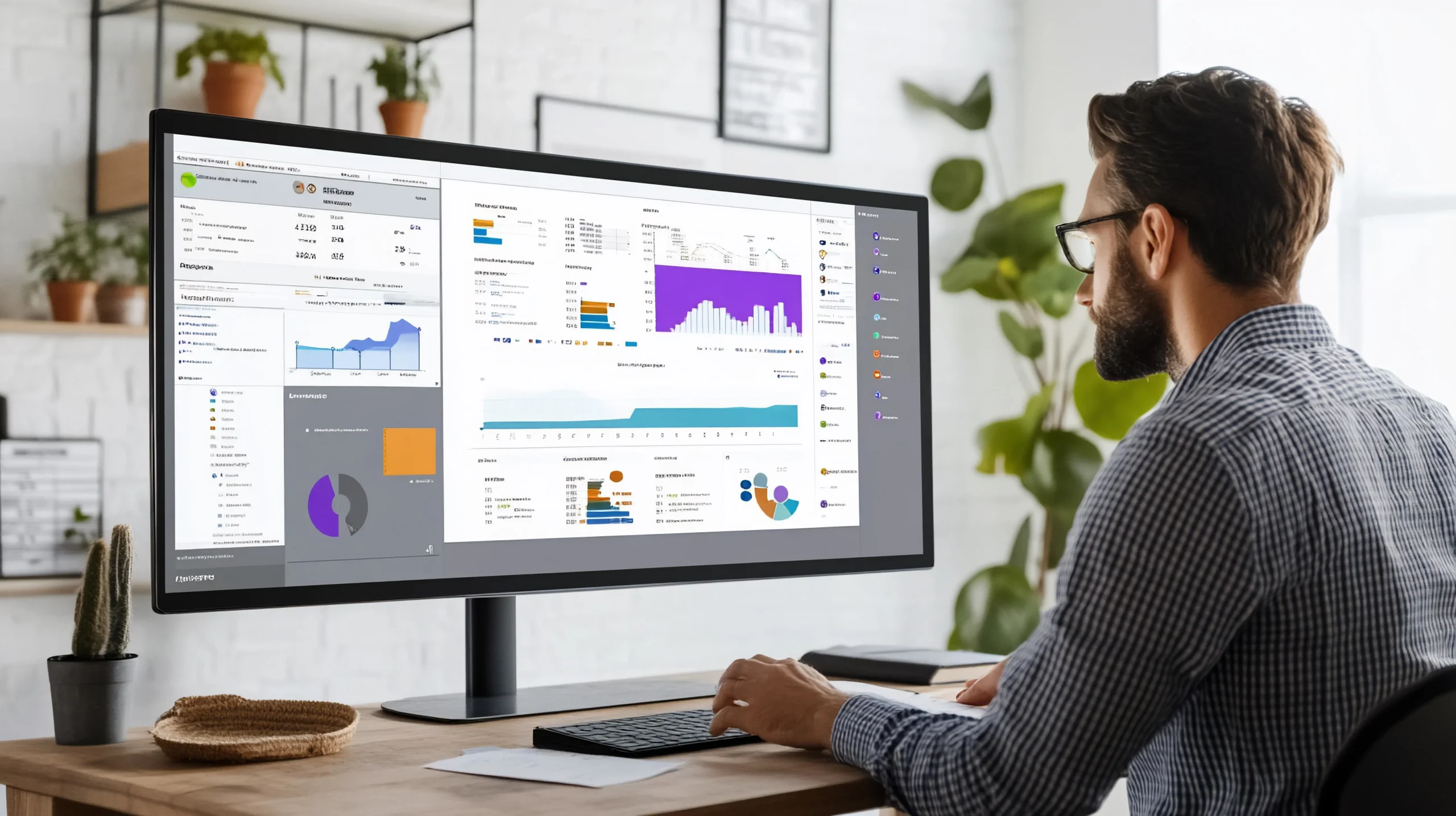
What happens when your investment records keep growing, but your investment management process still depends on spreadsheets and manual calculations?
As portfolios grow, frequent buy and sell transactions, changing market prices, profit calculations, and reporting can make accurate investment tracking harder.
That was the challenge faced by a client in the GCC region.
Their finance team managed share investments across multiple portfolios using manual methods. They needed a centralized way to:
- Track share transactions and financial calculations
- Manage multiple investment portfolios in one system
- Monitor portfolio performance and valuations
- Calculate realized and unrealized profit automatically
- Maintain consistent records for financial reviews
- Control user access to investment data
The client approached Vrinsoft Technology to develop a centralized investment management system for these operations.
As a top software development company, we have built an investment portfolio management solution that brings transactions, portfolio management, valuation tracking, financial calculations, reporting, and user permissions into one controlled environment.
The transaction-driven architecture updates relevant calculations when users add buy, sell, or portfolio transfer transactions.
Here is how we approached the project, the key features we developed, the technology behind the system, and the results delivered to the client.
The Challenge: Managing Investments Across Multiple Portfolios
Our client managed share investments across multiple portfolios using manual records. As transaction volumes increased, tracking purchases, sales, valuations, and portfolio performance became more difficult.
Each transaction could affect share quantities, cost base, realized profit, portfolio position, and valuation, making manual calculations increasingly difficult.
We identified several areas that required improvement:
- Manual investment tracking: Share transactions and portfolio information were maintained manually, increasing the possibility of calculation and data-entry errors.
- Fragmented portfolio data: Reviewing investments across multiple portfolios required additional effort.
- Manual reconciliation: Finance users had to check transactions against balances and performance figures.
- Complex calculations: Weighted average cost, realized profit, unrealized profit, investment value, and gain percentage needed to remain accurate as transactions changed.
- Portfolio transfers: Moving shares between portfolios required corresponding balance adjustments while preserving transaction history.
- Access control: Different users needed different levels of access to financial operations.
- Reporting: The client needed consistent, exportable information for internal reviews and audit reference.
We therefore focused on building investment portfolio management software around the client’s actual workflow, with centralized records, transaction-level calculations, portfolio visibility, controlled access, and structured reporting.
What the Client Needed From Investment Portfolio Management Software
Based on these requirements, we planned an investment management system that could bring the client’s daily investment operations into one place.
The core requirements were:
- Record buy and sell transactions with quantity, price, cost, and financial impact.
- Organize investments across multiple portfolios.
- Calculate weighted average cost and profit automatically.
- Separate realized and unrealized profit.
- Allow manual market price updates for valuation.
- Transfer shares between portfolios while maintaining accurate balances.
- Generate share-wise and portfolio-wise reports.
- Control access between administrators and sub-admin users.
These requirements shaped the architecture and functionality of the portfolio management system we developed.
Need a Custom Investment Management System?
Looking to centralize portfolio tracking, valuations, reporting, and financial calculations in one platform? Vrinsoft Technology builds custom fintech software tailored to your business needs.
How We Built the Investment Portfolio Management Software
Here are the core capabilities we implemented in the investment portfolio management software, covering share management, portfolio aggregation, valuation tracking, transfers, and access control.
A. Transaction-Driven Share Management
We built the platform to record every buy and sell transaction with its associated share and financial information.
When a transaction is added, the application processes quantity, price, and cost data to calculate weighted average cost and realized profit automatically.
This gives finance users consistent share records while reducing manual calculations.
B. Multi-Portfolio Management
The client needed to manage investments across multiple portfolios while keeping share records linked to the appropriate portfolio.
We created a portfolio structure that groups shares by defined categories and provides visibility at both asset and portfolio levels.
Users can review:
- Investment value
- Portfolio valuation
- Realized profit
- Unrealized profit
- Gain percentage
- Overall portfolio performance
This connects individual share records with broader portfolio summaries in the portfolio management software.
C. Automated Valuation and Performance Calculations
We added manual market price entry with automated valuation recalculation. When administrators update a market price, the system recalculates valuation and unrealized exposure.
The platform also automatically calculates:
- Total investment
- Realized profit
- Unrealized profit
- Gain percentage
- Current valuation
- Portfolio-level performance
This reduces repetitive spreadsheet calculations and keeps financial figures consistent.
Bonus Read: AI and ML in Finance: Key Benefits, Use Cases and Future
D. Inter-Portfolio Share Transfers
The client needed to move shares between portfolios without treating each transfer as a buy or sell transaction. We developed transfer logic that adjusts holdings between source and destination portfolios while preserving transaction history.
This keeps portfolio balances accurate and provides a clear record of investment transfers.
E. Role-Based Access and Activity Tracking
We implemented role-based access controls for administrators and sub-admin users, with permissions based on their responsibilities.
Activity logs record system actions and data modifications, providing an activity trail for internal reviews and greater control over financial operations.
Key Features of the Investment Portfolio Management System
We developed the following core features to support the client’s investment management workflow.
- Share Management: Records buy and sell transactions and processes weighted average cost and profit calculations.
- Portfolio Aggregation: Groups shares under defined portfolios and provides investment and valuation figures at portfolio level.
- Price and Valuation Tracking: Allows administrators to enter market prices and update related valuation and unrealized exposure figures.
- Automated Financial Calculations: Calculates total investment, realized profit, unrealized profit, valuation, and gain percentage based on transaction and price data.
- Reports and Analytics: Provides exportable share-wise and portfolio-wise performance summaries for internal financial reviews and audit reference.
- Activity Logs: Records system actions and data modifications to provide traceability across financial operations.
- Role-Based Access Control: Allows administrators to manage permissions and restrict financial modifications according to user roles.
- Master Data Management: Provides centralized management of accounting categories and reference values to maintain consistency across the system.
Technology Stack Behind the Investment Portfolio Management Software
We used a technology stack covering application development, financial data management, cloud infrastructure, API documentation, DevOps, analytics, and quality analysis.
PHP Laravel was used for application development, while MySQL handled structured financial data. AWS S3 and AWS EC2 supported storage and cloud infrastructure.
Swagger/Postman supported API documentation and testing, while GitLab CI/CD and GitLab supported development and releases.
Orange Scrum was used for project management and quality analysis, with Google Analytics supporting analytics. The project also included two months of free post-launch support.
Here is a quick overview:
| Area | Technology |
|---|---|
| Web Frontend | PHP (Laravel) |
| Backend | PHP (Laravel) |
| Server Storage | AWS S3 |
| Project Management | Orange Scrum |
| Database | MySQL |
| Cloud Compute | AWS EC2 |
| API Documentation | Swagger / Postman |
| DevOps | GitLab CI/CD |
| Releases | GitLab |
| Analytics | Google Analytics |
| Quality Analysis | Orange Scrum |
How Our Investment Management System Improved Operations
The new investment portfolio management software gave the client’s finance team a centralized way to manage investment information.
Instead of checking multiple files and manually updating connected calculations, users can access share and portfolio information through one web-based system.
The solution helped the client:
- Centralize investment and transaction records.
- Reduce dependence on spreadsheet-based calculations.
- Review portfolio performance from one system.
- Update market prices and related valuation figures.
- Generate reports for internal financial reviews.
- Maintain controlled access to financial operations.
- Track system actions through activity logs.
- Manage multiple portfolios within a structured system.
The client launched the system internally, and staff provided positive feedback after using it in their daily operations.
We delivered the stock and portfolio management system within the predetermined timeline. The solution improved investment tracking, portfolio visibility, financial oversight, and record traceability for internal reviews and audit reference.
It also reduced the client’s dependence on spreadsheet-based calculations.
The client plans to expand its usage and continue working with us to develop the existing software as its requirements grow.
Why Custom Investment Portfolio Management Software Can Make Sense
Every investment operation has its own processes, calculations, portfolio structures, and reporting requirements.
Standard portfolio management software may cover common requirements, while custom development gives businesses greater control over how those workflows are handled.
Custom investment portfolio management software development can be useful when you require:
- Specific transaction and accounting rules
- Multiple portfolio structures
- Custom valuation calculations
- Role-based permissions
- Tailored financial reports
- Custom dashboards and analytics
- Integration with existing business systems
- Future expansion based on changing requirements
For businesses working on broader fintech software development projects, an investment management system can also form part of a larger financial platform.
The right approach starts with understanding the business workflow, defining the required functionality, and selecting an architecture that can support the system as it grows.
Key Takeaways
This project shows how custom investment portfolio management software can bring transaction records, portfolio management, valuation, financial calculations, reporting, and access control into one system.
The main takeaways are:
- Transaction-level processing supports consistent financial calculations.
- Centralized portfolio management improves visibility across investments.
- Automated valuation reduces repetitive manual calculations.
- Activity logs and role-based access provide greater control over financial data.
- Custom software can be built around specific investment workflows and future requirements.
How Can Vrinsoft Technology Help You With Software Development?
At Vrinsoft Technology, a leading fintech software development company in the USA, we build software around the business processes our clients need to manage, automate, and scale.
This investment portfolio management system shows how we turn specific business requirements into practical digital solutions. We understand the workflow, define the required features, select suitable technologies, and develop the software around operational needs.
Our capabilities include:
- Custom software development for tailored business applications
- Fintech software development for financial and investment platforms
- Enterprise software development for complex business operations
- Web and mobile app development for internal and customer-facing applications
- SaaS and AI software development for scalable digital products
- Cloud, API integration, and software modernization for connected and updated systems
We support projects from planning and UI/UX design through development, testing, deployment, and ongoing support. Whether you need an investment management system, SaaS platform, enterprise application, mobile app, or another custom solution, we can build it around your requirements.
Contact Vrinsoft to Turn Your Software Idea Into a High-Level Digital Solution
Have a software idea, an existing application that needs improvement, or a manual business process you want to digitize?
Start by telling us what you need the software to accomplish. Our team can review your requirements, identify the core functionality, recommend a suitable technology approach, and define a development roadmap for the project.
At Vrinsoft, we work with businesses to turn software requirements into practical digital solutions that fit their workflows and future plans. Whether you are starting a new product or improving an existing system, we can help you move from requirements to development with a clear technical direction.
Contact us today to discuss your software development requirements and take the next step toward building your digital solution.




 sales@vrinsofts.com