









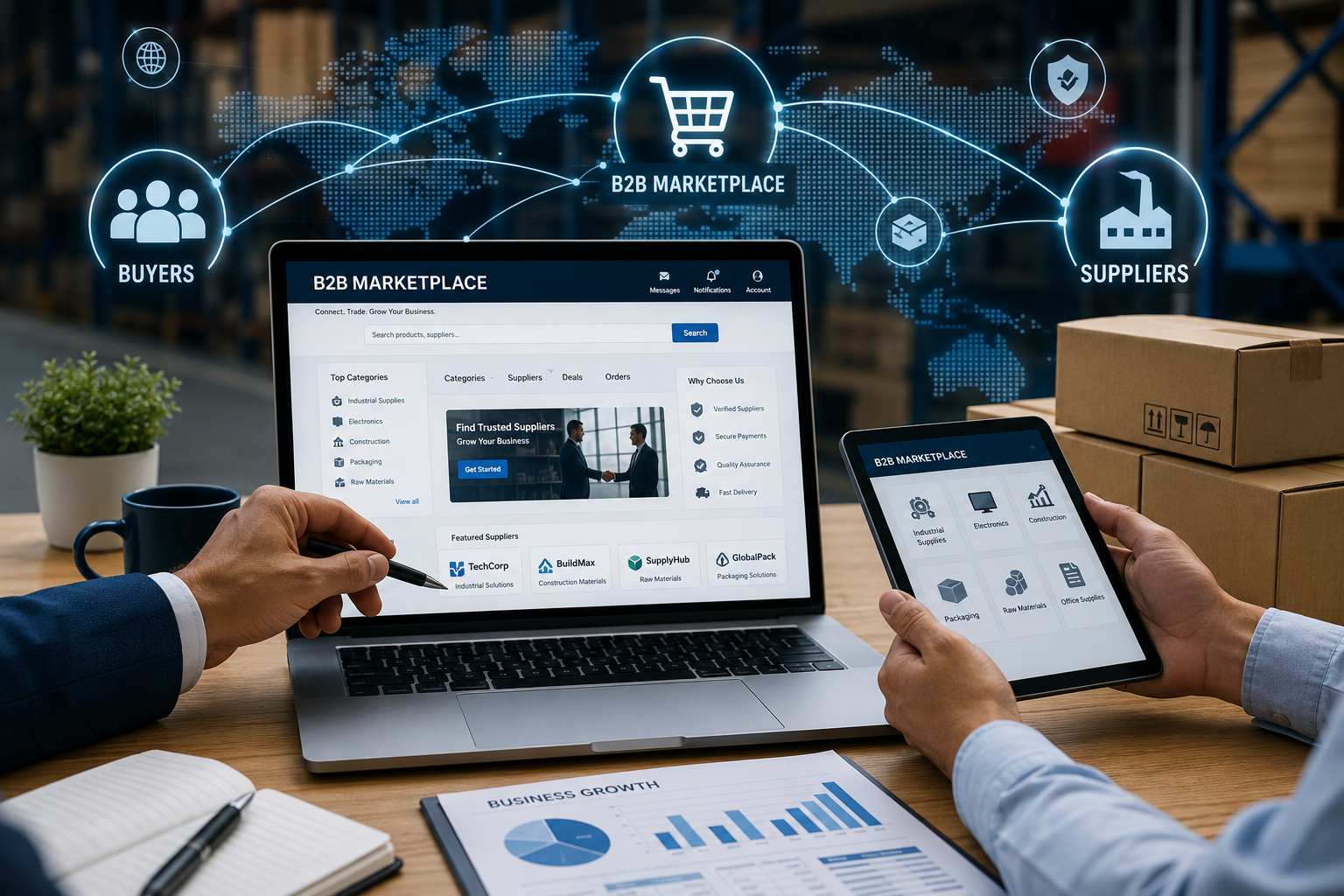
Key Takeaways:
- B2B marketplace development is transforming how businesses buy, sell, and manage supplier relationships.
- Choosing the right B2B marketplace business model is critical for long-term success.
- Modern B2B ecommerce platform development requires features such as vendor management, AI-powered recommendations, bulk ordering, and RFQ systems.
- Custom B2B marketplace software offers greater flexibility and scalability than off-the-shelf solutions.
- AI is rapidly becoming a competitive advantage in the B2B software marketplace platforms.
- Development costs vary depending on features, integrations, security requirements, and platform complexity.
- Partnering with an experienced marketplace development company can reduce risks and accelerate time-to-market.
What if your business could generate revenue from thousands of transactions without manufacturing products, managing inventory, or handling every sale directly?
That’s exactly why B2B marketplaces have become one of the most attractive digital business models in recent years.
Think about companies like Alibaba, Amazon Business, and Thomasnet. These platforms don’t simply sell products. They create digital ecosystems where buyers and suppliers connect, negotiate, and complete transactions at scale.
Today, businesses across the USA are following a similar path. Whether it’s wholesale distribution, manufacturing, healthcare, construction, logistics, or procurement, organizations are investing in B2B marketplace development to streamline operations, improve supplier discovery, and create entirely new revenue opportunities.
If you’re considering building a marketplace B2B platform, you’re probably asking some important questions:
- What exactly is a B2B marketplace?
- Which business model works best?
- What features do buyers and suppliers actually need?
- How much does marketplace development cost?
- Should you build custom B2B marketplace software or buy an existing solution?
The good news is you’re in the right place.
At Vrinsoft Technology, a leading ecommerce application development services, we’ve helped businesses develop scalable ecommerce and marketplace solutions that support long-term growth. In this guide, we’ll walk you through everything you need to know about B2B marketplace development in the USA, from business models and essential features to development costs, technology trends, and platform scalability.
Let’s dive in.
Why B2B Marketplace Development Is Growing Rapidly in the USA?
Business buying behavior has changed dramatically over the past decade.
Modern buyers expect the same convenience they experience when shopping online as consumers. They want instant product discovery, transparent pricing, personalized recommendations, digital payments, and seamless communication with suppliers.
Traditional procurement processes often involve:
- Manual supplier searches
- Lengthy email chains
- Paper-based workflows
- Delayed approvals
- Limited visibility into inventory and pricing
A modern online business-to-business marketplace eliminates many of these inefficiencies by bringing buyers and suppliers together on a centralized digital platform.
B2B Marketplace Statistics Every Business Leader Should Know in 2026
If you’re still wondering whether investing in B2B marketplace development is worth it, the numbers tell a compelling story.
The growth of B2B marketplace development isn’t based on trends alone. But it’s backed by significant market demand.
If you’re still wondering whether investing in B2B marketplace development is worth it, the numbers tell a compelling story.
The growth of B2B marketplace development isn’t based on trends alone. But it’s backed by significant market demand.
- The global B2B ecommerce market was valued at $24.1 trillion in 2025 and is projected to exceed $105 trillion by 2033, growing at a CAGR of 20.9%. (Grand View Research)
- U.S. B2B ecommerce sales surpassed $2.29 trillion, highlighting the rapid shift toward digital procurement and online purchasing. (eMarketer)
- 67% of B2B buyers are willing to spend $50,000 or more online without speaking to a sales representative, showing growing trust in self-service digital commerce experiences. (McKinsey)
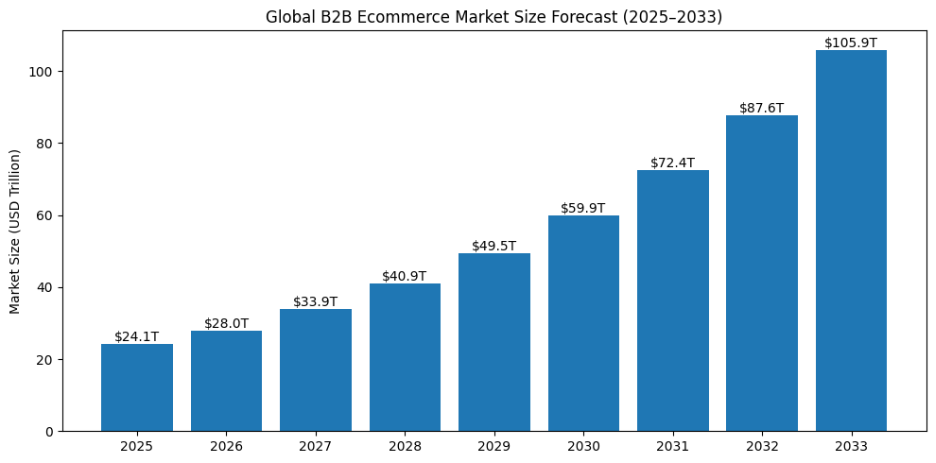
For businesses planning long-term growth, investing in a scalable B2B marketplace platform is becoming a competitive advantage.
What’s Driving Growth in B2B Marketplaces?
Several factors are accelerating demand for B2B marketplace development:
Digital Procurement Adoption
Organizations are replacing traditional purchasing processes with digital procurement platforms to improve efficiency and reduce operational costs.
Growth of Ecommerce in B2B Industries
Industries such as manufacturing, healthcare, logistics, construction, agriculture, and wholesale distribution are increasingly moving online.
AI-Powered Business Operations
Artificial intelligence is helping businesses automate supplier matching, demand forecasting, product recommendations, and procurement workflows.
Increased Demand for Marketplace Ecosystems
Rather than operating as standalone businesses, companies are creating digital ecosystems that connect multiple buyers and sellers through a single platform.
As these trends continue, B2B ecommerce platform development is becoming a strategic investment for organizations seeking sustainable growth.
Planning a B2B Marketplace in 2026?
From marketplace strategy and feature planning to AI-powered development, Vrinsoft Technology helps businesses build scalable B2B platforms designed for long-term growth.
What Exactly Is a B2B Marketplace?
Before you start planning features or evaluating development costs, it’s important to understand what separates a B2B marketplace from a traditional ecommerce website.
Many business owners assume they’re the same thing. They’re not. A traditional ecommerce website usually allows a single business to sell products directly to customers.
A marketplace B2B platform works differently. Instead of managing all inventory yourself, you create a platform where multiple suppliers, manufacturers, distributors, wholesalers, or service providers can connect with buyers.
Think of it this way: A traditional ecommerce website is like a single retail store. A B2B marketplace is more like a digital trade center where multiple businesses buy and sell products through one centralized platform. This model creates value for everyone involved.
Traditional Ecommerce vs. B2B Marketplace
A successful B2B marketplace creates value for all participants:
Buyers
- Greater supplier choice
- Competitive pricing
- Faster procurement
- Better transparency
Sellers
- Increased visibility
- New customer acquisition opportunities
- Lower sales costs
- Expanded market reach
Marketplace Owners
- Recurring revenue streams
- Scalable business growth
- Network effects
- High customer retention potential
| Traditional Ecommerce | B2B Marketplace |
|---|---|
| Single seller | Multiple sellers |
| Limited inventory | Vendor-managed inventory |
| Direct sales model | Platform-based ecosystem |
| One business controls products | Multiple vendors contribute products |
| Revenue from product sales | Revenue from commissions, subscriptions, and services |
Understanding the B2B Marketplace Business Model
One of the first questions business owners ask before investing in marketplace development services is:
“If I’m not selling products directly, where does the revenue come from?”
The answer lies in selecting the right B2B marketplace business model. Unlike traditional ecommerce businesses that generate revenue through product sales, a marketplace earns money by facilitating transactions and creating value for buyers and suppliers.
Let’s look at the most common monetization strategies.
A. Commission-Based Model
The marketplace earns a percentage of every transaction completed on the platform.
Examples include:
- Wholesale marketplaces
- Supplier networks
- Industry exchanges
B. Subscription-Based Model
Businesses pay recurring fees to access premium features or participate in the marketplace.
Common subscription benefits include:
- Advanced analytics
- Premium vendor listings
- Lead generation tools
- Marketing support
C. Listing Fee Model
Suppliers pay a fee to list products, services, or company profiles on the marketplace. This model is often used by niche and industry-specific platforms.
D. Advertising and Sponsored Listings
Many successful B2B marketplaces generate additional revenue by allowing vendors to promote products and gain greater visibility.
E. Lead Generation Model
Some marketplaces focus on connecting buyers with suppliers and earn revenue for each qualified lead generated.
F. Hybrid Revenue Model
In reality, many successful B2B marketplace examples combine multiple revenue streams.
For example, a marketplace may generate income from subscriptions, transaction commissions, premium listings, and advertising simultaneously.
This diversified approach often produces stronger profitability and long-term sustainability.
Popular B2B Marketplace Examples and What You Can Implement From Them
Studying successful B2B marketplace examples can help you identify opportunities and best practices for your own platform.
1. Alibaba
Alibaba is one of the world’s largest B2B marketplaces, connecting manufacturers and suppliers with businesses worldwide.
Key lessons:
- Massive supplier network
- Global reach
- Robust supplier verification
- Advanced search capabilities
2. Amazon Business
Amazon Business provides procurement solutions tailored specifically for organizations.
Key lessons:
- Streamlined purchasing workflows
- Bulk purchasing options
- Business account management
- Strong logistics integration
3. Thomasnet
Thomasnet focuses on industrial sourcing and supplier discovery.
Key lessons:
- Industry specialization
- Detailed supplier profiles
- Lead generation capabilities
- Trust-focused marketplace design
4. Faire
Faire connects retailers with independent brands and wholesalers.
Key lessons:
- AI-powered recommendations
- Simplified ordering
- Relationship-building tools
- Marketplace-driven growth
These successful platforms demonstrate that there is no single formula for marketplace success. The most effective B2B marketplace software aligns closely with the needs of its target industry and users.
Essential B2B Marketplace Features Every Platform Needs
Here’s a mistake many businesses make when planning a marketplace. They become so focused on launching quickly that they overlook the features buyers and suppliers actually need to use the platform successfully.
The reality is simple: your users won’t compare your marketplace to other B2B platforms alone. They’ll compare it to every great digital experience they use daily. If your platform feels slow, confusing, or difficult to navigate, adoption becomes much harder.
That’s why identifying the right B2B marketplace features is one of the most important stages of B2B ecommerce platform development. Let’s look at the features modern users expect from a successful marketplace.
1. Multi-Vendor Management
At the heart of every B2B marketplace is the ability to support multiple vendors.
Suppliers should be able to:
- Create and manage profiles
- Upload product catalogs
- Update pricing
- Manage inventory
- Process orders
- Track performance
A strong vendor management system makes marketplace growth much easier as more sellers join the platform.
2. Advanced Product Catalog Management
Unlike traditional ecommerce stores, B2B marketplaces often manage thousands or even millions of SKUs.
Your B2B marketplace software should support:
- Bulk product uploads
- Category management
- Product variations
- Dynamic pricing
- Inventory synchronization
- Product comparison tools
The easier it is for buyers to find products, the more likely they are to complete transactions.
3. RFQ (Request for Quote) System
Many B2B transactions don’t happen with a simple “Add to Cart” button.
Buyers often need custom pricing, volume discounts, or supplier negotiations before placing large orders.
An RFQ system allows buyers to:
- Submit quote requests
- Compare supplier responses
- Negotiate pricing
- Manage procurement workflows
For many industries, this feature is essential.
4. Advanced Search and Filtering
Imagine a buyer searching through thousands of products without proper filters. Frustrating, right? That’s why advanced search functionality is critical for marketplace success.
Users should be able to filter by:
- Product category
- Supplier
- Pricing
- Location
- Ratings
- Availability
- Delivery timelines
The faster users find what they need, the better their overall experience.
5. Secure Payment Processing
Trust plays a major role in every online business-to-business marketplace.
Your platform should support:
- Multiple payment gateways
- Credit terms
- Escrow services
- Digital invoicing
- Multi-currency transactions
- Tax management
Security and payment flexibility can directly influence marketplace adoption.
6. Order and Inventory Management
Buyers and suppliers need complete visibility throughout the purchasing process.
Modern marketplace development services typically include:
- Real-time order tracking
- Inventory management
- Shipment tracking
- Automated notifications
- Returns management
This helps reduce manual work while improving customer satisfaction.
7. Ratings and Reviews
Trust is one of the biggest challenges in B2B commerce.
Reviews and ratings help buyers evaluate suppliers before making purchasing decisions.
Benefits include:
- Increased transparency
- Better supplier accountability
- Improved buyer confidence
- Higher marketplace credibility
8. Analytics and Reporting Dashboards
Both marketplace operators and vendors need access to performance insights.
Key reporting capabilities include:
- Sales performance
- Revenue tracking
- Customer behavior analysis
- Vendor performance
- Inventory trends
- Conversion metrics
Data-driven decisions often separate successful marketplaces from struggling ones.
Step-by-Step B2B Marketplace Development Process
Building a successful B2B marketplace involves much more than developing a website. The most successful platforms combine strong business strategy, user-focused design, scalable technology, and continuous optimization.
If you’re planning to launch an online business-to-business marketplace, here’s what the process typically looks like.
Step 1: Market Research and Validation
Before investing in development, identify your target buyers, suppliers, competitors, and market opportunities.
Key questions include:
- What problem will the marketplace solve?
- Who are the primary users?
- How large is the potential market?
- What gaps exist in current solutions?
Proper validation helps reduce risk and improve long-term adoption.
Step 2: Define the Marketplace Business Model
Next, determine how the platform will generate revenue.
This may include:
- Commission-based transactions
- Subscription plans
- Premium vendor listings
- Lead generation services
- Hybrid monetization models
The right B2B marketplace business model will directly influence platform features and growth strategy.
Step 3: Plan Features and User Workflows
During this stage, businesses define critical functionality such as:
- Vendor onboarding
- Product catalog management
- RFQ systems
- Order management
- Payment processing
- Analytics dashboards
Prioritizing core features helps accelerate launch while maintaining scalability.
Step 4: Design the User Experience
User experience plays a major role in marketplace adoption. Buyers should be able to quickly discover suppliers, compare products, submit RFQs, and complete transactions with minimal friction.
Step 5: Marketplace Development and Integrations
Developers build the platform architecture, frontend interfaces, backend systems, APIs, and third-party integrations such as ERP systems, CRMs, payment gateways, and logistics platforms.
Step 6: Testing, Launch, and Growth
Before launch, the marketplace undergoes extensive testing for security, performance, usability, and scalability. Once live, ongoing optimization helps improve user acquisition, retention, and marketplace growth.
How AI Is Transforming B2B Marketplace Platforms in 2026?
Artificial intelligence is becoming one of the biggest competitive advantages in modern B2B ecommerce platform development.
Today’s buyers expect faster procurement processes, personalized recommendations, and smarter search experiences. AI helps deliver those capabilities while reducing operational workloads.
Some of the most valuable AI applications in B2B marketplace software include:
Intelligent Supplier Matching
AI can analyze buyer requirements and automatically recommend the most relevant suppliers based on pricing, location, product availability, and historical performance.
Personalized Product Recommendations
Similar to consumer ecommerce platforms, AI can suggest products and services based on browsing behavior, purchase history, and industry preferences.
Procurement Automation
AI-powered workflows can automate repetitive procurement tasks such as supplier qualification, RFQ processing, approvals, and order management.
Demand Forecasting
Machine learning models help businesses predict purchasing trends, inventory requirements, and future demand patterns.
AI-Powered Customer Support
Chatbots and virtual assistants can answer questions, guide users through procurement processes, and provide real-time support around the clock.
As competition increases, businesses that incorporate AI into their marketplace development strategy will be better positioned to improve user experiences and operational efficiency.
B2B Ecommerce Platform Development: Build vs Buy
One of the most important decisions businesses face is whether to build a custom marketplace or purchase an existing SaaS solution.
Each approach offers distinct advantages and limitations.
Option 1: SaaS Marketplace Platforms
SaaS solutions allow businesses to launch quickly using pre-built marketplace functionality.
Advantages
- Faster deployment
- Lower initial investment
- Reduced development effort
- Built-in maintenance
Challenges
- Limited customization
- Restricted scalability
- Vendor dependency
- Ongoing subscription fees
Difficulty implementing unique business requirements
For businesses with simple marketplace needs, SaaS platforms can be a viable starting point.
Option 2: Custom B2B Marketplace Development
Custom marketplace development provides complete control over platform functionality, integrations, and user experiences.
Advantages
- Full ownership
- Unlimited customization
- Better scalability
- Enhanced security
- Competitive differentiation
- Flexible monetization options
Challenges
- Higher upfront investment
- Longer development timeline
- Requires experienced development teams
For organizations planning long-term growth, custom B2B ecommerce platform development typically delivers greater value and flexibility.
Marketplace Development Cost in USA: What Should You Budget for in 2026?
Let’s address one of the biggest questions business owners ask: How much does it cost to build a B2B marketplace? The honest answer is that it depends on what you’re building.
A simple MVP designed to validate an idea will cost significantly less than a large-scale enterprise marketplace supporting thousands of buyers and suppliers.
As a general estimate:
| Marketplace Type | Estimated Cost |
|---|---|
| MVP Marketplace | $20,000 – $50,000 |
| Mid-Level Marketplace | $50,000 – $120,000 |
| Enterprise Marketplace | $120,000 – $300,000+ |
Industries Investing in B2B Marketplace Development
One common misconception is that B2B marketplaces are only for wholesale businesses. In reality, organizations across almost every industry are investing in marketplace development services.
If you’re wondering whether your industry is a good fit, the answer is probably yes.
- Manufacturers use B2B marketplaces to connect suppliers, distributors, and buyers through a centralized digital platform.
- Healthcare organizations are streamlining procurement for medical equipment, supplies, and specialized services through digital marketplaces.
- Construction companies increasingly rely on marketplace platforms to source materials, equipment, and contractors more efficiently.
- For Logistics and Transportation, digital marketplaces help connect shippers, carriers, freight providers, and logistics partners.
- Agricultural businesses are creating online marketplaces that connect growers, suppliers, distributors, and buyers.
- Wholesale companies use marketplaces to expand product visibility, simplify purchasing, and attract new business customers.
The reality is simple. If your industry involves buyers, suppliers, distributors, vendors, or procurement processes, there is a strong possibility that a custom B2B marketplace can create value for your business and your customers.
Why Businesses Choose Vrinsoft Technology for B2B Marketplace Development?
Successful marketplace development requires more than technical expertise.
It requires a partner who understands business goals, user behavior, scalability, and emerging technologies.
At Vrinsoft Technology, we help businesses design, develop, and launch custom B2B marketplace platforms that support growth and digital transformation.
Businesses choose Vrinsoft because of our:
- Expertise in custom marketplace development
- AI-powered software development capabilities
- Dedicated development teams
- End-to-end marketplace development services
- Flexible engagement models
Whether you’re building a wholesale marketplace, procurement platform, supplier network, or industry-specific marketplace, our team can help bring your vision to life.
Frequently Asked Questions About B2B Marketplace Development
Here are answers to some of the most asked questions related to B2B marketplace development:
Q1: What is a B2B marketplace?
A B2B marketplace is an online platform that connects businesses with suppliers, manufacturers, distributors, or service providers to facilitate transactions and procurement processes.
Q2: What are the most important B2B marketplace features?
Key B2B marketplace features include vendor management, RFQ systems, bulk ordering, custom pricing, secure payments, analytics dashboards, inventory management, and AI-powered recommendations.
Q3: How much does B2B marketplace development cost?
Marketplace development costs vary depending on complexity, features, integrations, and scalability requirements. Costs can range from $20,000 for an MVP to over $300,000 for enterprise-grade platforms.
Q4: How long does B2B marketplace development take?
Development timelines typically range from 3 to 12 months depending. on project scope and complexity.
Q5: Can AI be integrated into a B2B marketplace?
Yes. AI can power intelligent search, vendor matching, recommendation engines, demand forecasting, procurement automation, and customer support solutions.
Ready to Build a Scalable B2B Marketplace Platform?
If you’re planning to launch a marketplace B2B platform, choosing the right development partner is one of the most important decisions you’ll make.
At Vrinsoft Technology, we specialize in custom B2B marketplace development, helping businesses create secure, scalable, and future-ready platforms that connect buyers and sellers efficiently.
With over 16 years of industry experience, 2,000+ successful projects, and 900+ clients worldwide, we have the expertise to deliver ecommerce solutions tailored to your unique business goals.
Whether you need a wholesale marketplace, procurement platform, supplier network, or AI-powered B2B software marketplace, our team is ready to help.
Book a FREE consultation today and discover how our marketplace development services can help turn your idea into a successful digital business.




 sales@vrinsofts.com